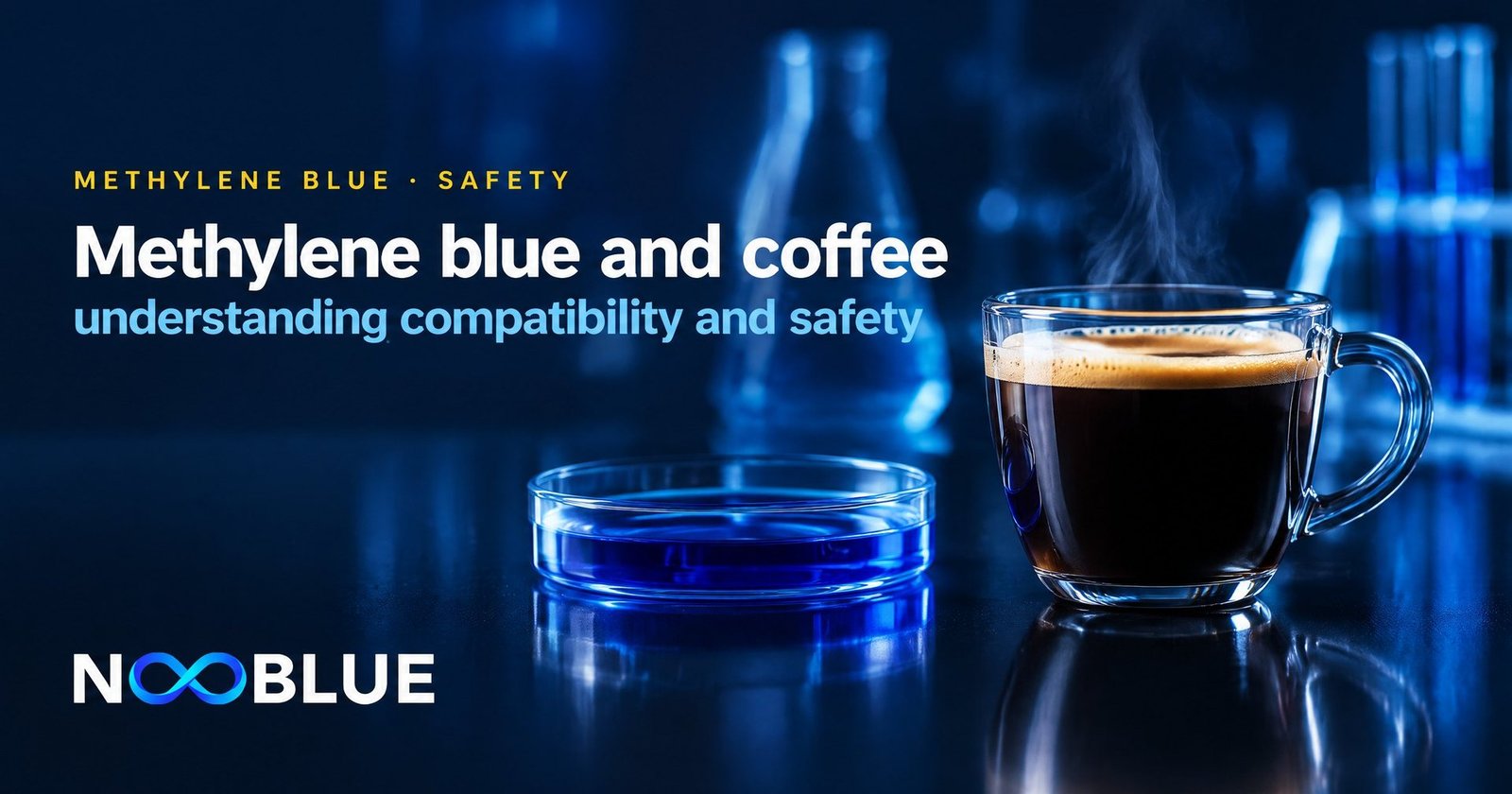
Can you take methylene blue with coffee? For most healthy adults, yes. Drug-interaction checkers list no interaction between caffeine and methylene blue, and a clinical study built into the prescribing information for injectable methylene blue found it did not change how the body handled caffeine. The practical issues are stimulation, timing and sleep. The real hard stop has nothing to do with coffee: methylene blue must not be combined with SSRIs, SNRIs, MAOIs or other serotonergic medicines. This guide walks through the evidence, a simple morning routine, the drinks that carry the most caffeine, and who should skip methylene blue altogether.
NooBlue makes methylene blue capsules, gummies and drops, so we have a commercial interest in this topic. Every study below is linked so you can check it yourself.
Methylene Blue and Coffee: The Short Answer
- No listed interaction. The Drugs.com interaction checker reports “no interactions found” between methylene blue and caffeine.
- Caffeine levels were unchanged in a clinical study. In a drug cocktail study, a 2 mg/kg intravenous dose of methylene blue did not affect exposure to caffeine, which is cleared by the liver enzyme CYP1A2.
- The common complaint is overstimulation. A strong coffee on an empty stomach plus a new supplement can leave you jittery, and you will not know which one caused it. Take methylene blue with breakfast and have your coffee 60 to 90 minutes later.
- Protect your sleep. Keep coffee and methylene blue to the morning or early afternoon.
- The rule that matters: never combine methylene blue with serotonergic medicines, and do not take it with G6PD deficiency, in pregnancy or breastfeeding, or under 18.
What the Research Says About Caffeine and Methylene Blue
No trial has given healthy adults a supplement-sized dose of methylene blue with a cup of coffee and measured the result. What we do have is three useful pieces of evidence, and together they point the same way.
The interaction checkers
Drugs.com, one of the methylene blue interaction references most people check first, lists no interaction between caffeine and methylene blue. The only disease interaction it lists for methylene blue is G6PD deficiency, rated major, because methylene blue can trigger the breakdown of red blood cells in people with that enzyme deficiency. Caffeine has its own list of conditions to watch, including heart disease and high blood pressure, and those stay relevant whether or not you take methylene blue.
The caffeine cocktail study
The prescribing information for ProvayBlue, the injectable methylene blue drug, reports a cocktail study. In it, a 2 mg/kg intravenous dose of methylene blue was given together with four probe drugs, one of them caffeine. Methylene blue did not change exposure to any of them. That matters because caffeine is broken down almost entirely by CYP1A2: a 2018 review in Pharmacological Reviews puts the share at 95% of the caffeine you drink (Nehlig, 2018).
The same document notes that in test-tube work, methylene blue both inhibited and induced CYP1A2. In people, at a dose far above a supplement serving, caffeine levels did not move. A 5 mg capsule is a fraction of that dose for any adult, so a change in how you clear your coffee is unlikely.
Coffee has its own mild MAO effect
In a 2006 lab study, ready-to-drink coffee inhibited human MAO-A and MAO-B enzymes. The researchers traced the effect to two beta-carboline compounds in coffee, harman and norharman, not to caffeine (Herraiz and Chaparro, 2006). Methylene blue is a potent reversible inhibitor of MAO-A (Ramsay et al., 2007). Nobody has measured whether the small amount from a cup of coffee adds anything meaningful to a supplement dose of methylene blue. It is one more reason to keep the methylene blue serving at the label amount and not stack it with other MAO-affecting products.
What has not been tested
The cocktail study used an intravenous dose, not a daily capsule, and it measured drug levels rather than how people felt. So the honest summary is this: there is no sign of a chemical interaction, and the practical risk comes from how two things that affect alertness feel when they land at the same time.
How Methylene Blue and Caffeine Differ
The two compounds work through different systems, which is why they are usually treated as independent inputs.
| Feature | Methylene blue | Caffeine |
|---|---|---|
| Main action | Carries electrons in the mitochondrial chain, from NADH to cytochrome c (Tucker et al., 2018) | Blocks adenosine receptors, mainly the A2A receptor in the brain |
| Serotonin link | Potent reversible MAO-A inhibitor, the reason for its serotonergic drug interaction | Not listed as interacting with methylene blue |
| How it is cleared | In lab studies, mainly conjugation by UGT enzymes, with some CYP metabolism | Almost entirely by the liver enzyme CYP1A2 |
| How long it stays | Half-life of about 24 hours | Short half-life, faster in smokers and slower with oral contraceptives |
| What you notice | Usually subtle, if anything. Urine can turn blue or green | Alertness, and jitters at higher intakes |
The long half-life of methylene blue is worth knowing. The gap between your capsule and your coffee has nothing to do with waiting for methylene blue to clear. It is about comfort and knowing which one is doing what. The caffeine details come from a 2022 analysis of caffeine data from 141 publications (Grzegorzewski et al., 2022).
How Much Caffeine Is in Your Cup?
Count milligrams of caffeine, not cups. The figures below are Mayo Clinic’s averages, mostly per 8 oz, and many cafe cups are larger than that.
| Drink | Size | Caffeine |
|---|---|---|
| Brewed coffee | 8 oz | 96 mg |
| Instant coffee | 8 oz | 62 mg |
| Espresso | 1 oz | 63 mg |
| Brewed decaf coffee | 8 oz | 1 mg |
| Brewed black tea | 8 oz | 48 mg |
| Brewed green tea | 8 oz | 29 mg |
| Cola | 8 oz | 33 mg |
| Energy drink | 8 oz | 79 mg |
| Energy shot | 2 oz | 200 mg |
For healthy adults, a 2017 systematic review of 381 studies found that up to 400 mg of caffeine a day was not associated with overt adverse effects on the heart, behavior, bone or reproduction (Wikoff et al., 2017). That is a ceiling for caffeine alone, not a target. If you are adding methylene blue for the first time, stay well under it while you learn how the two feel together. If the draw is steady energy without the caffeine spike, our guide to energy and focus supplements without stimulants covers other options.
How to Time Methylene Blue and Coffee
No study sets a required gap between the two. This routine is built around the capsule label and the sleep research, and it keeps each variable easy to read.
- Take methylene blue with breakfast. The NooBlue 5 mg methylene blue capsules say to take one capsule daily with food. The 10 mg gummies are one a day, chewed.
- Have coffee 60 to 90 minutes later. If you feel wired, you will know whether it came with the coffee or before it. If you prefer coffee first, take the capsule with food an hour later instead. The order matters less than consistency.
- Keep total caffeine moderate for the first week. One or two ordinary cups is a sensible start. Some people use decaf for the first few days to learn how methylene blue feels on its own.
- Stop caffeine at least six hours before bed. In a sleep study, 400 mg of caffeine taken six hours before bedtime still disrupted sleep compared with placebo (Drake et al., 2013). Some people also find methylene blue affects sleep when taken late, so keep it in the morning.
- Do not raise the methylene blue dose to match a bigger coffee habit. Stay at the label serving. Our guide to how many mg of methylene blue per day explains why supplement servings sit far below study doses.
Using drops? The NooBlue 1% methylene blue drops give 0.5 mg per drop, so 10 drops is a 5 mg serving. The label says to mix them with water or juice. We have not seen testing of methylene blue stirred into hot coffee, so follow the label rather than dosing into your mug. Drops can also stain the mouth and tongue. Our guide to taking methylene blue drops covers measuring and mixing.
Who Should Not Take Methylene Blue, With or Without Coffee
These rules match the safety box on every NooBlue product page. Read them before you think about timing.
- Do not take methylene blue if you take an SSRI, SNRI, MAOI or any other serotonergic medicine, including many antidepressants. The combination can cause serotonin syndrome.
- Do not take it if you have G6PD deficiency.
- Not for use during pregnancy or while breastfeeding.
- Not for anyone under 18.
- Talk to your doctor first if you take any prescription medicine, or if you have a kidney or liver condition.
- Methylene blue can turn urine blue or green. This is expected.
Two caffeine-specific points are worth adding. Some prescription headache tablets combine caffeine with ergotamine, and Drugs.com rates the ergotamine and methylene blue combination as a major interaction because ergotamine is serotonergic. The prescribing information for injectable methylene blue also says to avoid combining it with opioids. If you take either, speak to your doctor before using methylene blue. And if you have a heart rhythm problem or high blood pressure, check with your doctor about caffeine itself, since both appear on its list of disease interactions.
For the full list, see who should not take methylene blue and what not to take with methylene blue.
Signs to Stop and What They Mean
Too much caffeine and too much stimulation feel alike. Pause the combination and cut back on coffee if you notice:
- a racing or pounding heartbeat
- shakiness or jitters
- restlessness that gets in the way of concentrating
- a worse night’s sleep than usual
A different set of symptoms needs urgent care. The prescribing information describes serotonin syndrome as mental status changes such as agitation or confusion, a fast heartbeat, unstable blood pressure, sweating, flushing and high temperature, tremor, stiffness or muscle jerks, and sometimes nausea, vomiting or diarrhea. If you take any serotonergic medicine and notice these after methylene blue, get medical help straight away. Our methylene blue side effects guide covers the milder effects people report.
Beyond Coffee: Tyramine and the Foods That Matter
With a monoamine oxidase inhibitor, the food question is tyramine, not coffee. MAO-A in the gut breaks tyramine down, and Ramsay and colleagues noted that methylene blue’s MAO-A inhibition has implications for how the gut handles dietary amines when it is taken by mouth. With prescription MAOIs, a large tyramine load can raise blood pressure.
The risk is smaller than old food lists suggest. A 2018 review found that modern production methods have cut the tyramine content of most foods, and that even matured cheeses are usually fine in normal portions. The same review covers the other foods older lists flagged, such as fish and soy sauces, salami-type sausages, dried meats, beers and wines (Gillman, 2018). No study has measured tyramine responses with supplement-sized methylene blue. A sensible approach is to keep the dose at the label serving, avoid a very large tyramine load in the same few hours, and stop and call your doctor if you get a sudden pounding headache after a rich meal.
Choosing a Format if You Drink Coffee
All three NooBlue formats work with a morning coffee routine. The difference is how you want to take the dose. Prices as of Sep 2026.
| Format | Dose | How to take it | With coffee | Price per serving |
|---|---|---|---|---|
| Capsules | 5 mg + 10 mg vitamin C, 60 per bottle | One a day with food | Easiest: take with breakfast, coffee later. Nothing to taste or measure | $0.63 |
| Gummies | 10 mg + 25 mg vitamin C, 60 per bottle | Chew one a day | No blue mouth. A higher dose per serving than the capsule | $0.83 |
| Drops | 0.5 mg per drop, 50 mL, about 100 servings at 5 mg | 10 drops in water or juice | Mix in water, not your coffee. Can stain mouth and tongue | $0.30 |
Our pick for most coffee drinkers is the capsule: a fixed 5 mg dose, taken with food, with nothing to measure before your first cup. The drops cost least per serving and suit people who want to adjust in small steps. For more on purity and what a lab report does and does not show, see how to find safe, authentic methylene blue supplements.
Key Takeaways
- You can take methylene blue with coffee if nothing on the safety list applies to you. No interaction is listed, and a clinical cocktail study found methylene blue did not change caffeine exposure.
- The practical issue is feeling overstimulated. Take methylene blue with breakfast, have coffee 60 to 90 minutes later, and keep caffeine moderate at first.
- Stop caffeine at least six hours before bed, and keep methylene blue in the morning.
- Never combine methylene blue with serotonergic medicines. Skip it with G6PD deficiency, pregnancy, breastfeeding or under 18.
- Drops go in water or juice, not coffee. Capsules and gummies avoid the question.
Frequently Asked Questions
Is it safe to drink coffee while using methylene blue?
For most healthy adults, yes. Drugs.com lists no interaction between caffeine and methylene blue, and a clinical study found methylene blue did not change caffeine exposure. The caveat is stimulation: take methylene blue with breakfast, have coffee 60 to 90 minutes later, and keep both to the morning. Anyone taking serotonergic medicines, or with G6PD deficiency, pregnancy or breastfeeding, should not take methylene blue at all, coffee or not.
Can I put methylene blue drops in my coffee?
We advise against it. The NooBlue drops label says to mix them with water or juice, and we have not seen testing of methylene blue in hot coffee. Take your 10 drops (5 mg) in water, then have coffee later. If you want no measuring at all, the capsules or gummies avoid the question.
Does coffee change how methylene blue works?
There is no evidence that it does. The two act on different systems, and the only clinical data point, a cocktail study in the prescribing information, found methylene blue left caffeine levels unchanged. No study has measured the reverse at supplement doses.
Should I worry about serotonin syndrome with coffee and methylene blue?
Caffeine is not listed as interacting with methylene blue. Serotonin syndrome risk comes from combining methylene blue with serotonergic medicines such as SSRIs, SNRIs and MAOIs, and with ergotamine, which some headache tablets pair with caffeine. If you take any of these, do not take methylene blue unless your doctor says otherwise.
How long should I wait between methylene blue and coffee?
No gap is required, but 60 to 90 minutes is a practical choice. It lets you tell which one is responsible if you feel overstimulated. Methylene blue with breakfast and coffee mid-morning works for most people. Keep both before early afternoon to protect sleep.
What should you not mix with methylene blue?
The serious one is serotonergic medicine: SSRIs, SNRIs, MAOIs and many other antidepressants. The injectable drug’s prescribing information also warns against combining it with opioids. Ask your doctor about any prescription medicine, and avoid a very large tyramine load from aged or fermented foods around your dose. Our methylene blue interactions guide has the longer list.
Why do I feel so good on methylene blue?
No trial of daily supplement servings has measured wellbeing, so we can’t say. The best human data come from a randomized trial in 26 healthy adults, where a single dose increased brain activity during attention and memory tasks and gave 7% more correct memory-retrieval answers one hour later (Rodriguez et al., 2016). If you take it alongside coffee, the caffeine may be a large part of what you notice. Our methylene blue benefits and side effects guide sets out what the research does and doesn’t show.
Why do I feel weird after taking methylene blue?
If you took it with a strong coffee on an empty stomach, overstimulation is the likeliest cause, so try it with food and push coffee later. Headache, nausea and dizziness are listed side effects of the injectable drug at clinical doses. If you take any serotonergic medicine and feel agitated, confused, feverish or shaky, get medical help straight away. Otherwise stop, and talk to your doctor before trying again.
What does methylene blue do to your gut?
Nausea and diarrhea are listed side effects of the injectable drug at clinical doses. Taken by mouth, methylene blue also inhibits MAO-A in the gut, which is why tyramine-rich foods deserve some care. The NooBlue capsule label says to take it with food, which also suits a coffee routine. Blue or green urine is expected.
Is tea or matcha a gentler pairing than coffee?
Usually, because the caffeine per cup is lower. Brewed black tea averages 48 mg per 8 oz and green tea 29 mg, against 96 mg for brewed coffee. Matcha varies with how much powder you use. Energy drinks and shots go the other way. Count milligrams, not cups.
Should I switch to decaf during my first week on methylene blue?
It is a good way to test one thing at a time. Decaf coffee averages 1 mg of caffeine per 8 oz, so a morning dose of methylene blue with decaf shows you how methylene blue feels on its own. Bring your usual coffee back after a few days, one cup at a time.
The Bottom Line
Coffee and methylene blue can share a morning. There is no listed interaction, and the one clinical study that looked found methylene blue did not change how the body handled caffeine. Start low, take methylene blue with breakfast, leave an hour or so before coffee, and keep caffeine out of your evenings. The real risk sits elsewhere: serotonergic medicines, G6PD deficiency, pregnancy and breastfeeding. If none of those apply, a 5 mg capsule with breakfast is the simplest place to start. You can compare all three formats below or browse the NooBlue shop, and our guide to whether methylene blue is safe to take daily covers long-term use.
Sources
- Drugs.com. Caffeine and methylene blue interactions. drugs.com
- Drugs.com. Caffeine/ergotamine and methylene blue interactions. drugs.com
- ProvayBlue (methylene blue) injection, prescribing information. DailyMed, National Library of Medicine. DailyMed
- Nehlig A. Interindividual differences in caffeine metabolism and factors driving caffeine consumption. Pharmacological Reviews. 2018;70(2):384-411. PubMed 29514871
- Grzegorzewski J, Bartsch F, Köller A, König M. Pharmacokinetics of caffeine: a systematic analysis of reported data for application in metabolic phenotyping and liver function testing. Frontiers in Pharmacology. 2022;12:752826. PubMed 35280254
- Herraiz T, Chaparro C. Human monoamine oxidase enzyme inhibition by coffee and beta-carbolines norharman and harman isolated from coffee. Life Sciences. 2006;78(8):795-802. PubMed 16139309
- Ramsay RR, Dunford C, Gillman PK. Methylene blue and serotonin toxicity: inhibition of monoamine oxidase A (MAO A) confirms a theoretical prediction. British Journal of Pharmacology. 2007;152(6):946-951. PubMed 17721552
- Tucker D, Lu Y, Zhang Q. From mitochondrial function to neuroprotection: an emerging role for methylene blue. Molecular Neurobiology. 2018;55(6):5137-5153. PubMed 28840449
- Wikoff D, Welsh BT, Henderson R, et al. Systematic review of the potential adverse effects of caffeine consumption in healthy adults, pregnant women, adolescents, and children. Food and Chemical Toxicology. 2017;109(Pt 1):585-648. PubMed 28438661
- Drake C, Roehrs T, Shambroom J, Roth T. Caffeine effects on sleep taken 0, 3, or 6 hours before going to bed. Journal of Clinical Sleep Medicine. 2013;9(11):1195-1200. PubMed 24235903
- Gillman PK. A reassessment of the safety profile of monoamine oxidase inhibitors: elucidating tired old tyramine myths. Journal of Neural Transmission. 2018;125(11):1707-1717. PubMed 30255284
- Rodriguez P, Zhou W, Barrett DW, et al. Multimodal randomized functional MR imaging of the effects of methylene blue in the human brain. Radiology. 2016;281(2):516-526. PubMed 27351678
- Mayo Clinic. Caffeine content for coffee, tea, soda and more. mayoclinic.org