Key Takeaways
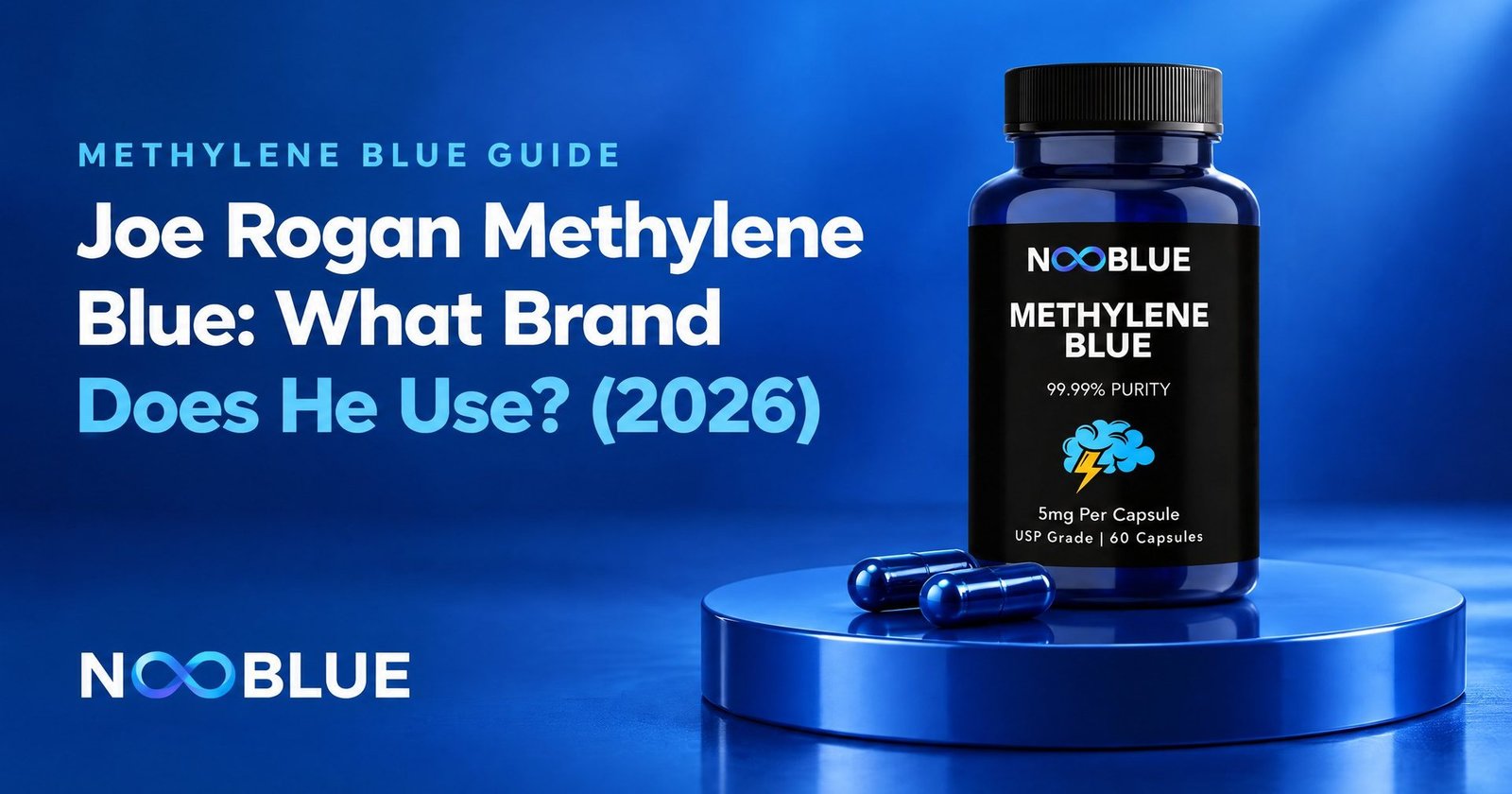
- There is no verified answer to the Joe Rogan methylene blue brand question. He has discussed the compound on his podcast but has never named a product on air.
- Any site telling you the specific brand, dose or schedule he uses is filling a gap in the record with guesswork.
- The useful move is to judge a methylene blue supplement on grade, third-party testing and dosing accuracy, which you can check yourself.
Search interest in “joe rogan methylene blue” spiked with the 2025 podcast clips. What has not changed since then is the answer: across every publicly circulated clip and transcript of him discussing the compound, no brand name appears. Not one.
That absence is worth stating plainly, because most pages ranking for this question quietly invent an answer. This guide covers what is actually documented, why the gap exists, and, more usefully, the verification checklist that lets you assess any methylene blue product on evidence instead of celebrity association.
Table of contents
- 1. Does Joe Rogan Endorse a Specific Methylene Blue Brand? The Direct Answer
- 2. Joe Rogan Methylene Blue: What’s Actually on the Record
- 3. Why No One Can Name a Joe Rogan Methylene Blue Brand
- 4. What the Research Behind the Podcast Conversation Shows
- 5. Why Mainstream Coverage of the Rogan Clips Is Skeptical
- 6. How to Judge a Methylene Blue Brand Without a Celebrity Endorsement
- 7. How NooBlue Measures Against That Checklist
- 8. Frequently Asked Questions
- 8.1. Has Joe Rogan named a methylene blue brand?
- 8.2. What does methylene blue actually do for the body?
- 8.3. Is it bad to take methylene blue every day?
- 8.4. What drugs should not be taken with methylene blue?
- 8.5. Does it matter which brand of methylene blue you buy?
- 8.6. Why did this article change?
- 8.7. Why don't doctors prescribe methylene blue for brain health or longevity?
- 8.8. What supplements does Joe Rogan actually take, and is methylene blue one of them?
- 9. Sources
Does Joe Rogan Endorse a Specific Methylene Blue Brand? The Direct Answer
No. Joe Rogan has discussed methylene blue on The Joe Rogan Experience in the context of mitochondrial biohacking, but he has never named a brand, dose or format on air. The mechanism he refers to, methylene blue cycling electrons in mitochondria, is set out in a 2014 Biochemical Pharmacology review (volume 88, pages 584–593) by Gonzalez-Lima, Barksdale and Rojas (PMID 24316434).
Joe Rogan Methylene Blue: What’s Actually on the Record
Rogan has referenced methylene blue on The Joe Rogan Experience in the broad context of longevity, mitochondrial function and cognitive performance. Those references are general: he has expressed interest in the compound and its reputation among biohackers and longevity researchers.
What is not on the record, and what we will not manufacture here:
- A brand name. He has not endorsed or identified a specific methylene blue product.
- A dose. No milligram figure attributable to him has been published.
- A format. Whether he uses capsules, liquid or another form is not documented.
- A schedule. Timing, frequency and stacking details are not on the public record.
An earlier version of this article estimated a dose by applying a weight-based formula to a public figure’s reported body weight. That was inference presented as reporting, and we have removed it. If you want an evidence-based dosing framework for yourself rather than a guess about someone else, our guide to daily methylene blue milligram amounts sets out how the ranges used in research are actually derived.
Why No One Can Name a Joe Rogan Methylene Blue Brand
Two things make this question unusually hard to answer honestly, and understanding them is a decent filter for supplement content generally.
First, podcast mentions are conversational, not sponsored disclosures. When a host discusses a compound in passing during a three-hour conversation, there is rarely a product in frame and no obligation to name one. The mention drives search volume. It does not create a documented purchase.
Second, that search volume creates commercial pressure to answer anyway. A page that says “we don’t know” competes against pages that assert a brand confidently. The assertion usually traces back to nothing: a guess repeated until it looks like sourcing. The same pattern shows up around every high-profile name in this space. We hold ourselves to the same rule, and our review of the NooBlue brand sticks to what a reader can check.
A practical test: if a page names a celebrity’s brand, look for the citation. An episode number, a timestamp, a screenshot, a direct quote. If the claim rests on “reportedly” or “sources suggest,” it is decoration.
There is a third factor, less obvious but worth naming. Interest in this question has faded since the 2025 wave, so the pages built to capture the celebrity spike are aging without being corrected. The claims calcify, get copied, and end up cited by AI summaries as though they were sourced. The half-life of a confident guess in this space is much longer than the half-life of the interest that produced it.
What the Research Behind the Podcast Conversation Shows
The reason methylene blue comes up in longevity conversations at all is a real body of published work, worth separating from the celebrity framing entirely.
A review by Rojas, Bruchey and Gonzalez-Lima in Progress in Neurobiology described methylene blue’s action as a redox cycler in the mitochondrial electron transport chain, and set out the hormetic dose-response pattern reported in the literature: low doses associated with metabolic and memory-related effects in animal models, with those effects fading or inverting at higher doses (PMID 22067440). Note that the memory findings discussed there are largely preclinical: rodent work, not human trials.
A later review by Gonzalez-Lima, Barksdale and Rojas in Biochemical Pharmacology examined mitochondrial respiration as a target for neuroprotection and cognitive enhancement, and is the standard reference for why the effective range is described as narrow rather than open-ended (PMID 24316434).
Tucker, Lu and Zhang’s review in Molecular Neurobiology traced the same mechanism through to neuroprotection, again drawing predominantly on preclinical models (PMID 28840449). For the longevity angle specifically, Xue, Thaivalappil and Cao reviewed methylene blue’s anti-aging potential in Cells, and were explicit that the human evidence base remains thin relative to the cell and animal data (PMID 34943887).
Two corrections worth flagging, since this article previously carried them. An earlier version attributed a human attention study to the American Journal of Geriatric Psychiatry and an electron-carrier finding to Biochemical Pharmacology using PubMed IDs that belong to entirely unrelated papers, one on bone-graft materials, one on EEG signal classification. Both citations have been removed. We mention it rather than quietly patching it because a wrong PMID that resolves to a real page is exactly the kind of error a reader cannot catch without clicking through.
Studies suggest the compound’s behavior is dose-sensitive, which is precisely why sourcing and dosing accuracy matter more here than in most supplement categories. The safety picture is covered in detail in the NIH’s StatPearls monograph on methylene blue, and in our own breakdown of what not to take with methylene blue. The interaction list is short but important.
Why Mainstream Coverage of the Rogan Clips Is Skeptical
Most of what ranks alongside this question is not supplement marketing but news coverage, and the tone is consistently cautious. The 2025 viral wave of podcast clips, followed by videos of people tipping blue liquid into water glasses, drew responses from health reporters and clinicians making three points: the memory and anti-aging claims rest largely on cell and animal data, the compound has real interactions (serotonergic medications above all), and a dye sold for aquariums is not a supplement. None of that contradicts the research summarized above. It is the same picture with the hype removed.
The practical takeaway is the one this article keeps returning to. If you decide to try methylene blue, do it on the strength of the documentation, at a low dose, with a clinician who knows your medication list, not because of a clip. These are the safety rules printed on every NooBlue product page:
- Do not take methylene blue if you take an SSRI, SNRI, MAOI or any other serotonergic medicine, including many antidepressants. The combination can cause serotonin syndrome.
- Do not take it if you have G6PD deficiency.
- Not for use during pregnancy or while breastfeeding.
- Not for anyone under 18.
- Talk to your doctor first if you take any prescription medicine, or if you have a kidney or liver condition.
- Methylene blue can turn urine blue or green. This is expected.
How to Judge a Methylene Blue Brand Without a Celebrity Endorsement
This is the part that actually transfers. Four criteria, each verifiable before you buy, with no insider knowledge required.
1. Grade, stated explicitly. USP or pharmaceutical grade means the material meets a defined purity standard. Lab-grade and technical-grade methylene blue are manufactured for staining and industrial use, and are not intended for consumption. A product that does not state its grade has told you something. Our comparison of lab grade versus pharmaceutical grade methylene blue covers where the practical differences show up.
2. A published Certificate of Analysis from an independent lab. Not a manufacturer’s self-declaration, but an actual third-party COA you can read, covering purity, heavy metals and related dye impurities. If it is not published, ask. If it cannot be produced, that is the answer. Our guide to reading a methylene blue COA walks through which lines matter.
3. Dosing you can actually control. A stated milligram content per capsule, or a clearly marked volume per drop. Given how dose-sensitive the research shows this compound to be, “one dropperful” is not a dose. If you are weighing formats, our comparison of NooBlue capsules versus liquid solutions lays out the trade-offs, and the reported side effects of methylene blue gummies are worth reading before choosing a flavored format.
4. A short, legible ingredient list. Methylene blue, any co-ingredient with its amount stated, and the capsule or base. Proprietary blends and undisclosed “support compounds” add variables you cannot assess and cannot dose around.
Applied honestly, this checklist will disqualify a lot of products that market themselves on association with a name. That is the point of it. It also inverts the usual research order: instead of starting with a personality and working backwards to a product, you start with the specification and let the products fall where they fall. The brands that survive the four checks tend to be the ones publishing the most documentation, which is not a coincidence: publishing a COA is expensive if the material will not pass one.
One caveat on the checklist. It tells you whether a product is what it claims to be. It does not tell you whether you should take it. Those are separate questions, and the second one belongs with a clinician who knows your medication list. Verification is a floor, not a recommendation.
How NooBlue Measures Against That Checklist
We cannot tell you what Joe Rogan uses. We can tell you exactly what NooBlue does, in terms you can check against the four criteria above.
NooBlue’s methylene blue is USP grade. Each product page links a lab report from Contract Testing Laboratories of America (CTLA) on the methylene blue ingredient, recording an HPLC identity result and individual results for arsenic, cadmium, mercury and lead. That report covers the raw ingredient lot, not every finished batch, and we say so. The Ultimate Methylene Blue Capsules are pre-dosed at 5mg per capsule with 10mg of vitamin C, 60 capsules for $37.99, so precision dosing does not depend on counting drops. The 1% Solution in 50ml is $29.99 for readers who prefer to measure by the drop, at 0.5mg per drop. The Methylene Blue Gummies carry 10mg of the same USP-grade methylene blue per gummy plus 25mg of vitamin C. Vitamin C can shift methylene blue toward its colorless reduced form, leucomethylene blue, and the gummies do not leave the blue mouth that drops can. The deep purple color comes from blueberry extract. Zero sugar, pectin base, 60 gummies for $49.99. NooBlue ships worldwide, free on orders of $100+.
The capsule formula is methylene blue, vitamin C, rice flour and a cellulose capsule, with each active amount on the label. The gummies’ supporting ingredients (pectin, blueberry extract, stevia, sodium citrate and citric acid) are listed on the product page. If you want to see how NooBlue sits against the rest of the field on those same criteria, our comparison of the best methylene blue supplements puts the specifications side by side, and our methylene blue gummies comparison does the same for chewable formats. Shop the full range when you have satisfied yourself on the documentation, not before.
To be clear about what that section is and is not: NooBlue sells methylene blue, so treat the paragraph above as a specification sheet rather than a verdict. The four checks are the part worth keeping. Run them against us and against everyone else, and the comparison will hold up whether or not you buy anything here.
This article is for educational purposes only and is not medical advice. Methylene blue is a potent compound. Talk to a qualified healthcare professional before starting any new supplement, especially if you take medication (notably SSRIs or MAOIs) or have a health condition.
Frequently Asked Questions
Has Joe Rogan named a methylene blue brand?
No. He has discussed methylene blue on his podcast in the context of longevity and mitochondrial health, but no publicly circulated clip or transcript has him naming a specific product. Any page that supplies a brand name is not working from a citable source.
What does methylene blue actually do for the body?
The mechanism described across the published reviews is that methylene blue acts as a redox cycler in the mitochondrial electron transport chain, able to accept and donate electrons and, in doing so, support cellular respiration. Most of the memory and neuroprotection findings come from cell and animal models rather than large human trials, so the honest framing is “a well-characterised mechanism with a still-developing human evidence base.”
Is it bad to take methylene blue every day?
The literature describes a hormetic, dose-sensitive pattern, with effects reported at low doses that fade or invert as the dose rises. That is why daily use is a question about amount as much as frequency. NooBlue’s label servings are one 5mg capsule, one 10mg gummy or 10 drops (5mg) a day, and the labels say not to exceed the suggested serving. It is a decision to make with a qualified healthcare professional who knows your medication list, not one to settle from a podcast clip.
What drugs should not be taken with methylene blue?
The most important interaction is with serotonergic medications, including SSRIs, SNRIs and MAOIs, because methylene blue has monoamine oxidase inhibiting activity. This is not a minor precaution. Our guide to methylene blue interactions covers the list, and anyone on prescription medication should raise it with their prescriber before starting.
Does it matter which brand of methylene blue you buy?
More than in most supplement categories. Because the compound is dose-sensitive and because non-pharmaceutical grades of methylene blue are widely sold for laboratory and aquarium use, grade and third-party verification are doing real work here. A readable third-party COA and a stated milligram-per-serving figure are the two things worth insisting on.
Why did this article change?
It previously included a dose estimate inferred from a public figure’s body weight, format and timing preferences that were not attributable to any source, and two research citations whose PubMed IDs pointed to unrelated papers. All of it has been removed or corrected. We would rather publish a shorter page that is accurate than a longer one that reads authoritatively and is not.
Why don't doctors prescribe methylene blue for brain health or longevity?
Because the evidence they would need does not exist yet. Methylene blue has narrow, well-established uses in hospital medicine, but the memory, mood and anti-aging findings that drive podcast interest come mostly from cell and rodent studies, as the reviews cited above make clear. Add a genuine interaction risk with SSRIs, SNRIs and other serotonergic drugs, and most clinicians will not prescribe it off-label for cognition. That does not make the mechanism fake; it means the human trials have not caught up with the hype.
What supplements does Joe Rogan actually take, and is methylene blue one of them?
Rogan has talked about his supplement routine on air for years, and he co-founded Onnit, the company behind the Alpha Brain nootropic, so a paper trail exists for some products. Methylene blue is not among them. He has discussed the compound with guests and expressed interest in it, but no clip or transcript documents him taking it, naming a dose, or naming a brand. Discussing a compound and using it are different things, and only the first is on the record. For a documented starting point of your own, see our methylene blue dosage guide.
Sources
- Gonzalez-Lima F, Barksdale BR, Rojas JC. Mitochondrial respiration as a target for neuroprotection and cognitive enhancement. Biochemical Pharmacology. 2014;88(4):584-593. PubMed 24316434
- Rojas JC, Bruchey AK, Gonzalez-Lima F. Neurometabolic mechanisms for memory enhancement and neuroprotection of methylene blue. Progress in Neurobiology. 2012;96(1):32-45. PubMed 22067440
- Tucker D, Lu Y, Zhang Q. From mitochondrial function to neuroprotection: an emerging role for methylene blue. Molecular Neurobiology. 2018;55(6):5137-5153. PubMed 28840449
- Xue H, Thaivalappil A, Cao K. The potentials of methylene blue as an anti-aging drug. Cells. 2021;10(12):3379. PubMed 34943887
- StatPearls. Methylene Blue. NCBI Bookshelf NBK557593